10 Essential Tips for Choosing Solar PV Panels for Your Home?

Choosing the right solar PV panels for your home can be a challenging task. With numerous options available, it's easy to feel overwhelmed. These panels are a significant investment. They can greatly impact your energy bills and the environment. Most homeowners want efficient and durable products. However, not all panels are created equal.

When selecting solar PV panels, consider efficiency ratings. Higher efficiency means more electricity from less space. Look for reputable brands that offer warranties. This ensures product reliability over the years. It's also vital to assess your home's solar potential. Factors like roof angle and shading play a crucial role.

Be cautious of your budget, but remember, cheaper isn’t always better. We often prioritize initial costs over long-term benefits. Researching local incentives can help with financing. Reflect on your energy needs and the potential for future growth. Understanding these factors will guide your choice. A thoughtful decision will lead to sustainable energy for years to come.

10 Essential Tips for Choosing Solar PV Panels for Your Home?

Understanding Your Energy Needs and Usage Patterns

Understanding your energy needs is crucial when choosing solar PV panels. Before making any decision, analyze your household's electricity consumption. Take a look at your monthly bills. Identify peak usage times. This data will help you estimate how much energy you'll require from the solar system.

Usage patterns also play a significant role. Consider when your family consumes the most power. Is it during the day or at night? If you're often away from home during the day, your needs may differ. Think about energy-efficient appliances as well. They can reduce your overall consumption, allowing for a smaller solar setup.

Reflect on seasonal changes too. Your energy needs may vary throughout the year. For instance, you might use more cooling in summer and more heating in winter. Make note of these fluctuations. They can impact the system’s design and efficiency. Knowing this information will guide you in selecting the right solar panel size for your home.
10 Essential Tips for Choosing Solar PV Panels for Your Home

This chart compares the efficiency of different types of solar photovoltaic (PV) panels commonly available in the market. Understanding these efficiencies can help you make an informed decision when choosing solar panels for your home.

Evaluating Different Solar PV Panel Types and Technologies

When choosing solar PV panels, evaluating different types and technologies is crucial. There are three primary categories of solar panels: monocrystalline, polycrystalline, and thin-film. Monocrystalline panels often provide the highest efficiency rates, typically around 15% to 20%. This efficiency means you can generate more energy from a smaller installation. However, these panels can be more expensive, which may discourage some homeowners.

Polycrystalline panels offer a more budget-friendly option. Their efficiency generally ranges from 13% to 16%. Many homeowners appreciate the lower upfront costs, but the trade-off is often a larger space requirement. Thin-film panels present a different solution. While their efficiency (around 10% to 12%) may be lower, they are lightweight and highly flexible. This makes them suitable for roofs with unique shapes, but you may need more panels to achieve the same output.

Industry data show that over 50% of consumers prioritize efficiency when selecting solar panels. Yet, it's essential to not overlook factors like the warranty, temperature coefficient, and degradation rate. Some panels perform well initially but decline faster than others. Understanding these nuances can help homeowners make informed decisions tailored to their specific needs and goals.

Assessing the Quality and Efficiency Ratings of Solar Panels

10 Essential Tips for Choosing Solar PV Panels for Your Home?

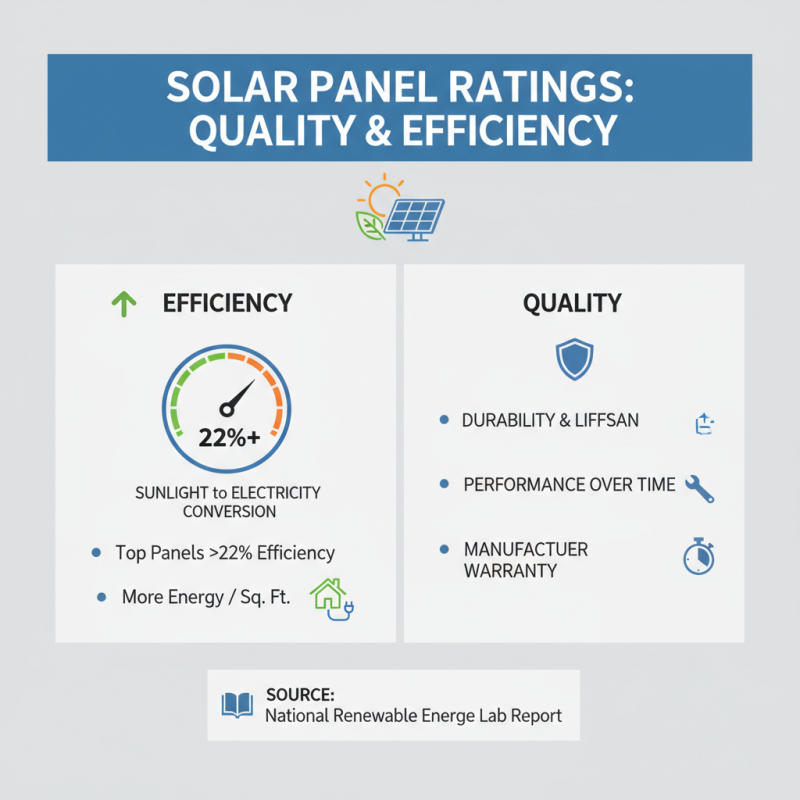
When choosing solar PV panels for your home, examining their quality and efficiency ratings is crucial. Efficiency ratings indicate how much sunlight a panel can convert into usable electricity. According to a report by the National Renewable Energy Laboratory, top-tier panels can achieve efficiencies exceeding 22%. This means they produce more energy per square foot, making them ideal for smaller rooftops.

Quality is also determined by durability. A panel’s lifespan can vary significantly. Some panels last over 30 years, while others may degrade faster. Monitoring reports show that degradation rates can be as high as 1% per year for lower-quality panels. That can lead to severe energy loss over time. Consider these factors when assessing quality.

Performance in real-world conditions is another vital aspect. Not all panels perform equally under varying temperatures and shading. In hotter climates, for instance, efficiency can drop significantly. Some panels lose up to 20% of their performance as temperatures rise. Conduct thorough research to understand how specific panels perform in your local environment. It is essential to navigate these complexities to make an informed decision.

Considering Manufacturer Reputation and Warranties Offered

10 Essential Tips for Choosing Solar PV Panels for Your Home?

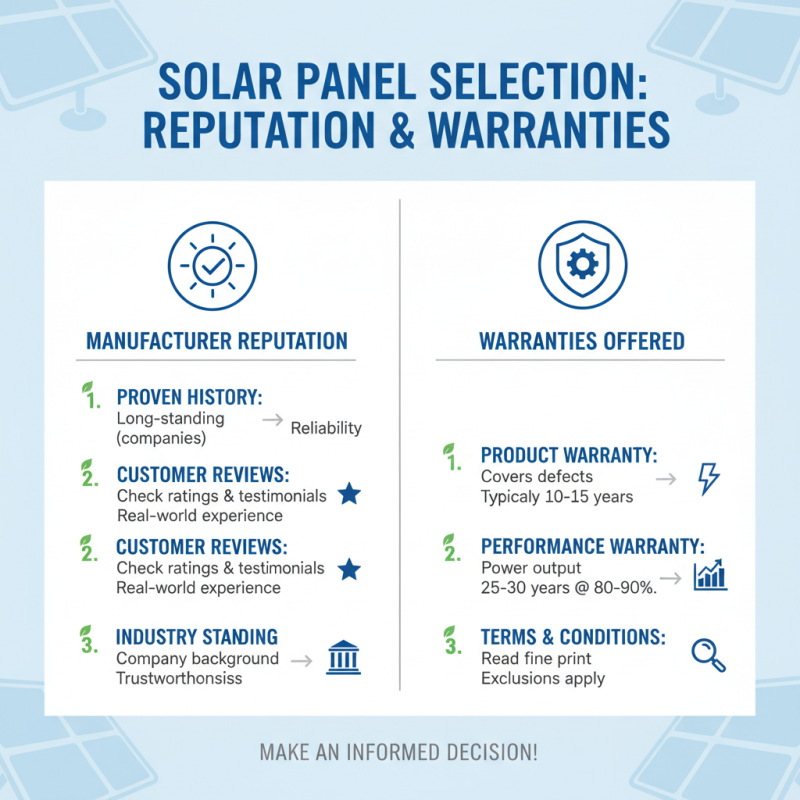
When selecting solar PV panels, manufacturer reputation is critical. A brand with a solid history often indicates reliability. Look for reviews and ratings from past customers. Their experiences can reveal potential issues or advantages. Scrutinize the company’s background. Consider how long they have been in the solar industry. Longevity often reflects trustworthiness.

Warranties are equally important. A longer warranty usually suggests confidence in the product. Look for at least a 25-year warranty on performance. Some companies even offer better coverage. Research what is included in the warranty. Does it cover production, labor, and parts? This can save you money down the line. It's essential to verify the warranty terms, as some may include hidden clauses.

In the end, it's vital to balance reputation with warranty offerings. Think critically about your choices. Sometimes, a lesser-known brand and strong warranty can outperform more famous names. Reflect on your priorities: what matters most to you? This consideration can lead to a wiser investment in solar technology.

Analyzing Installation Costs and Potential Incentives or Rebates

Installing solar PV panels can be a great investment. However, costs can vary significantly. Understanding installation costs is crucial before making a decision. The average cost of installing solar panels can range from $15,000 to $30,000. This figure often includes labor, equipment, and additional materials. It’s essential to get quotes from several installers to find the best price. Ensure you also look at your home’s energy consumption. It can affect the system size you need.

Potential incentives can ease the financial burden. Many regions offer rebates that can significantly reduce the upfront cost. Federal tax credits may also apply. Research your local programs. Some states have specific incentives aimed at promoting solar energy use. These can sometimes cover up to 30% of your installation costs. Be aware, however, that these programs can change. Ensuring you have the latest information is vital. Also, consider your home's location. Some areas may have less sunlight, affecting overall efficiency. Balancing cost, efficiency, and incentives will guide your decision well.

10 Essential Tips for Choosing Solar PV Panels for Your Home

Tip Key Consideration Estimated Cost ($) Incentives/Rebates
1. Assess Your Home's Energy Needs Evaluate historical energy usage N/A N/A
2. Research Panel Types Monocrystalline vs. Polycrystalline $0.80 - $1.50 per watt State and federal tax credits
3. Evaluate Roof Space and Orientation Ideal angles and shading considerations N/A N/A
4. Consider Installation Costs Compare quotes from installers $15,000 - $25,000 total system cost Local grants or subsidies
5. Assess Panel Efficiency Higher efficiency means more energy $1,000 - $3,000 additional cost N/A
6. Check Manufacturer Warranty Look for at least 25 years N/A N/A
7. Research Installer Credentials Ensure licensed and insured N/A N/A
8. Evaluate Financing Options Loans, leases, and PPAs Varies widely N/A
9. Understand the Installation Process Timeline and steps involved N/A N/A
10. Review Maintenance Requirements Cleaning and inspections needed $200 - $400 annually N/A