How Do Solar Panels Work?
Solar panels turn sunlight into usable electricity through a process called the photovoltaic effect. “Solar is the new king of electricity markets,” said Fatih Birol, Executive Director of the International Energy Agency. His remark captures solar power’s growing importance, but the panel’s operation is more specific than a slogan suggests. It begins with light.
Inside each panel, thin silicon cells absorb photons from sunlight. That energy frees electrons in the silicon. The cell’s electric field guides those electrons, creating direct current. Wires carry that current to an inverter, which converts it into alternating current for many household appliances. No magic. Just materials, light, and electrical engineering.
The details matter. A rooftop panel can still produce electricity on a cloudy day, though usually less than under strong, direct sunlight. Shade, dirt, temperature, and panel angle can also affect its output. At home, a meter may track electricity moving to or from the grid; a battery can store some surplus power. Neither is required for the cells themselves to generate electricity.
Understanding how solar work happens helps readers separate the panel’s role from the inverter’s and the rest of the system’s. It also makes the limits easier to see: output changes with weather and time of day. Solar power is useful, but it is not constant. Even this explanation leaves out details, such as cell design and system controls. That is worth remembering when comparing systems or reading performance claims.
Sunlight and the Structure of a Solar Panel
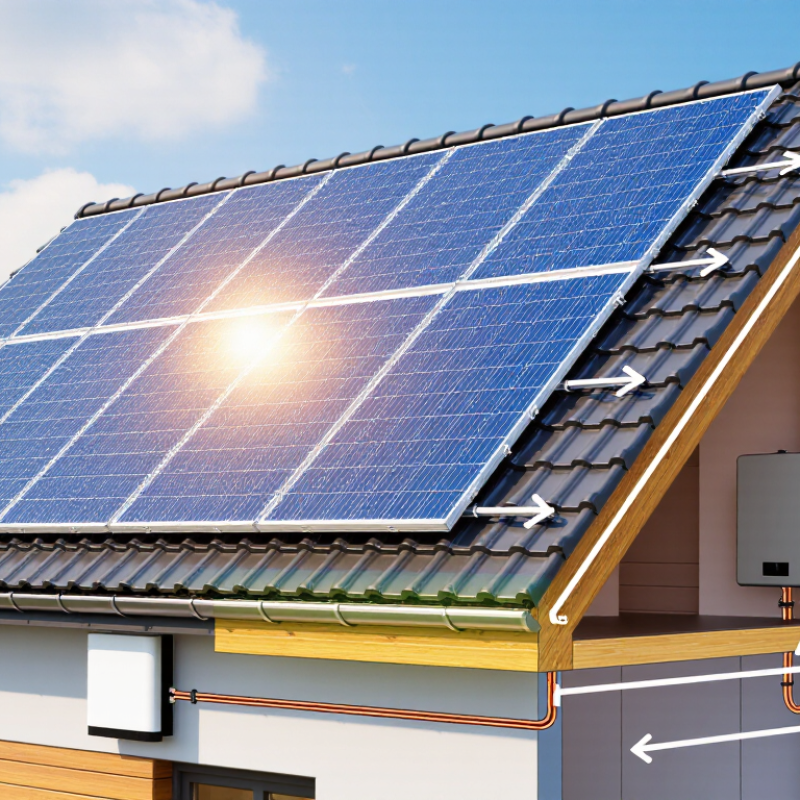
Sunlight reaches a solar panel as packets of energy called photons. In a silicon cell, photons can free electrons from atoms. An electric field at the cell’s junction separates charges, creating direct current (DC). Fine metal contacts collect it, while wiring links cells into a circuit. That is the mechanism. Glass lets light through and protects the cells. Encapsulant cushions them, and a backsheet or rear glass insulates the assembly. The frame adds stiffness, but cannot prevent every crack or gradual loss of output.
The materials reflect the industry’s dominant design. Fraunhofer ISE’s Photovoltaics Report (2024) estimates crystalline silicon represented roughly 97% of global photovoltaic module production in 2023. That measures production, not every panel already installed. Small changes matter. Shade from a branch, dusty glass, or a hot roof can reduce a panel’s output. Its DC electricity then travels to an inverter, which converts it to alternating current for typical household use. This is a simplified picture: cell layout and wiring vary, and a panel does not turn every photon into electricity.
How Photovoltaic Cells Turn Light into Electricity
How Do Solar Panels Work?
How Photovoltaic Cells Turn Light into Electricity
A photovoltaic cell changes light into electrical energy through materials inside the cell, usually layers of treated silicon. Sunlight arrives as particles called photons. When a photon carries enough energy, it can free an electron from an atom in the silicon. This does not mean the panel stores sunlight; it creates moving electrical charges while light reaches the cells.
A boundary between the silicon layers creates an internal electric field. That field nudges freed electrons in one direction and leaves positively charged “holes” moving the other way. Metal contacts collect the charges, producing direct current. A wire can carry that current to an inverter, which changes it into alternating current for many household circuits. That is the key.
The simple diagram leaves things out. Real cells have protective glass, electrical connections, and other layers that help manage light and heat. A small patch of shade can reduce a panel’s output, though the effect depends on its wiring and the rest of the array. Heat can also lower a cell’s voltage, so bright, cool conditions may sometimes produce more power than hotter ones. Measuring output on a clear afternoon is useful, but a single reading cannot show how much electricity a system will make across changing seasons.
How an Inverter Converts Electricity for Everyday Use
Solar cells produce direct current, but household outlets use alternating current. The inverter performs that conversion, while tracking the panels’ operating point as sunlight and temperature change. In practical terms, it is the quiet box that keeps the current usable. NREL’s PVWatts Version 8 technical reference uses 96% as its default inverter efficiency. That is a modeling assumption, not a promise for every installation. A hot inverter, partial shade, or very low output can change real-world performance. The number helps, but it can also mislead if treated as a constant.
Inside a grid-connected system, the inverter shapes the output to match the grid’s voltage and frequency, then shuts down if grid power is lost. That protects utility workers and equipment. Some systems also include battery controls, which manage charging and stored energy. IEA PVPS estimated at least 447 gigawatts of new solar capacity was installed worldwide in 2023, making dependable conversion a large-scale concern, not just a rooftop detail. At home, monitoring may show production dipping when clouds pass, then rising again. Small fluctuations are normal. Still, an unexpectedly persistent drop deserves investigation; a screen reading alone cannot identify whether the cause is shade, wiring, or the inverter itself.
How Solar Panels Connect to Homes and the Power Grid
On a typical rooftop, sunlight creates direct-current (DC) electricity in the panels. An inverter converts it into alternating current (AC) for the home’s wiring. That is the key handoff. Electricity then flows through the breaker panel to appliances such as a refrigerator or washing machine. IEA PVPS’s Trends 2024 report estimates that about 456 gigawatts of solar photovoltaic capacity was installed worldwide in 2023, expanding the systems that connect generation to homes and grids.
When panels produce more power than a home uses, a grid-connected system can send the surplus through the meter to local wires. After sunset or during cloudy periods, the home can draw electricity from the grid. It is tempting to picture the meter spinning backward; modern meters often record imports and exports separately. How exported power is credited depends on the local utility’s tariff and interconnection rules.
The grid also provides a safety connection. During an outage, a standard grid-tied inverter usually shuts off, even in bright sun, to avoid sending electricity onto lines being repaired. A battery and suitable backup equipment can keep selected circuits running, but they add cost and require careful system design. The detail is easy to miss: solar panels alone do not guarantee power during an outage. A homeowner should check which circuits the backup system serves and how long its stored energy may last.
Factors That Influence Solar Panel Performance
Solar panels convert sunlight into direct-current electricity, but their output changes throughout the day. Sunlight strength, panel angle, and roof orientation all matter. A south-facing roof often receives strong midday sun in the Northern Hemisphere, though local conditions can change the best arrangement. Partial shade from a chimney or tree can reduce output, sometimes more than people expect. Small shadows matter.
Heat is another factor. Panels generally produce less electricity as their cells get hotter, even on bright days. Dust, pollen, and fallen leaves can also block light. Rain may wash away some debris, but not everything. Inverters and wiring affect how efficiently the generated electricity reaches a home. A performance dip does not always mean the panels are faulty; weather and seasonal sunlight can explain it.
Tips: Compare energy output across similar months, not just different days. Check for new shade at morning and afternoon. Keep panels clear of heavy debris, but avoid climbing onto a roof. If output stays unusually low, ask a qualified installer to inspect the system.
Performance is rarely controlled by one thing. A cool, clear afternoon may outperform a hotter, hazier one, even when both look sunny. I find that visual brightness can be misleading; measured output gives a more useful picture. Still, readings need context, including weather, panel age, and system condition.
How Do Solar Panels Work? — Factors That Influence Solar Panel Performance
Solar cells convert sunlight into electricity, but higher cell temperatures typically reduce their power output. This illustration uses a representative temperature coefficient of −0.4% per °C relative to 25°C; actual coefficients vary by panel, and real-world output also depends on factors such as sunlight intensity, shading, and panel orientation.