What is Solar Technology and How Does it Work?
Solar technology has become a crucial part of the modern energy landscape. As the world shifts towards sustainable solutions, understanding how solar energy works is essential. Dr. Emily Peters, a leading expert in renewable energy, states, "Solar technology is not just a trend; it's a necessity for our planet's future."
At its core, solar technology harnesses sunlight to generate electricity and heat. This process involves solar panels, which convert light into energy. The simplicity of this mechanism is deceptive. Many still overlook the potential of solar technology in reducing carbon footprints.
Despite its advantages, solar technology faces challenges. The efficiency of solar panels varies, and not all regions receive equal sunlight. Storage options for this energy can also be limited. As we explore solar technology, it's vital to critically assess both its benefits and its gaps. Achieving a sustainable future requires innovation and reflection.
What is Solar Technology?
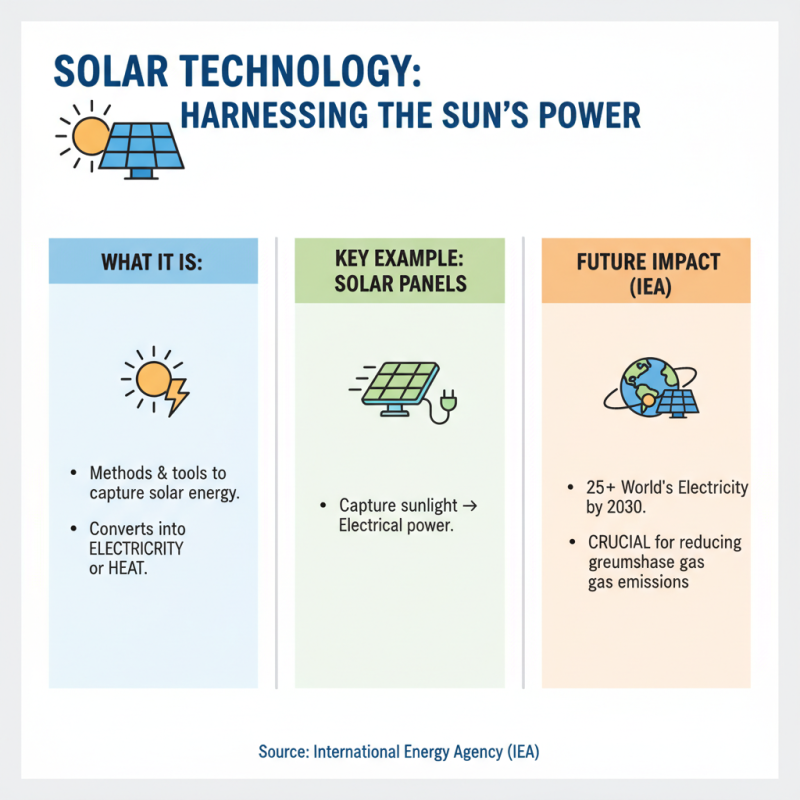
Solar technology refers to the methods and tools used to harness the sun's energy. This energy can be converted into electricity or heat. Solar panels, for example, capture sunlight and convert it into electrical power. According to the International Energy Agency (IEA), solar energy could supply over 25% of the world’s electricity by 2030. This shift is crucial for reducing greenhouse gas emissions.
Understanding solar technology involves recognizing its main components. Photovoltaic cells convert sunlight directly into electricity. Solar thermal systems, on the other hand, use sunlight to heat fluids. These technologies are increasingly becoming efficient, but not without challenges. Some installations face issues with space or weather dependency. Storage methods, like batteries, still require improvement.
**Tip:** When considering solar installation, evaluate your location's sunlight exposure.
Another key factor is cost. The average cost of solar power has dropped significantly over the years. Yet, initial investments can still pose barriers. According to a recent report, financing options and incentives influence adoption rates. Many potential adopters feel uncertain about returns on investment.
**Tip:** Research local incentives to make solar more affordable.
History and Development of Solar Energy
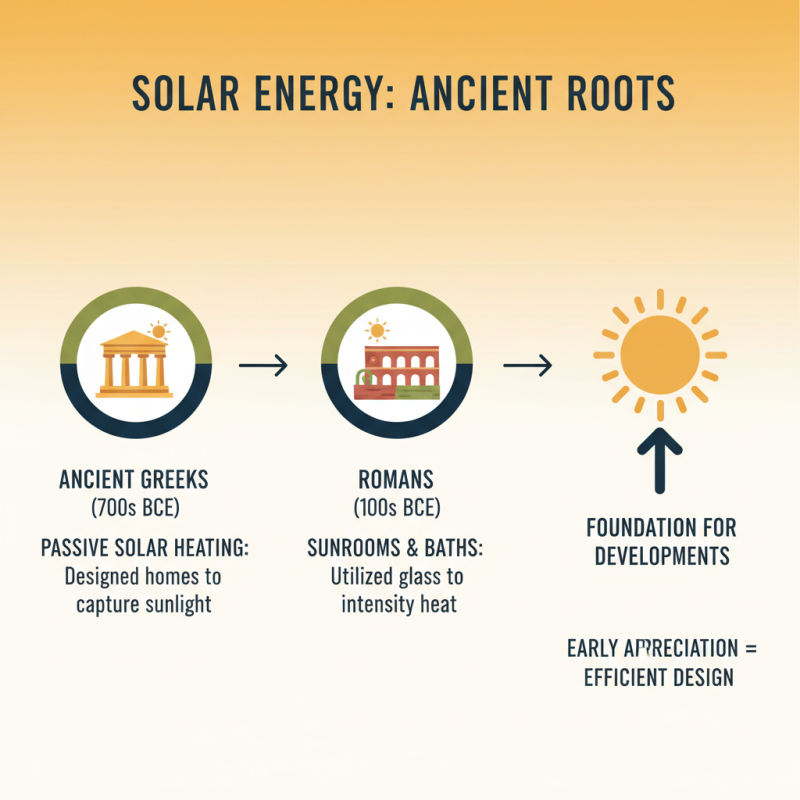
The history of solar energy dates back thousands of years. Ancient civilizations, such as the Greeks and Romans, used sunlight for heating. They designed homes to capture sunlight effectively. This early appreciation laid a foundation for future developments.
In the 19th century, scientists began to study solar energy more formally. In 1839, a French physicist discovered the photovoltaic effect. This phenomenon occurs when light creates an electric current in certain materials. However, it took years for technology to progress from this discovery. The first practical solar cells appeared in the 1950s. They were expensive and not widely used.
By the 1970s, energy crises prompted renewed interest. Governments and researchers sought renewable energy sources. Solar panels slowly gained popularity as costs dropped. Yet, challenges remained. Efficiency rates were low. Many people were skeptical about the technology’s viability. These obstacles encouraged further research and innovation. Each advancement often comes with its own set of concerns and limitations.
Types of Solar Technology: Photovoltaic and Thermal Systems
Solar technology is an incredible advancement. It plays a crucial role in harnessing the sun's energy. There are two main types of solar technology: photovoltaic (PV) systems and solar thermal systems. Both serve distinct purposes but share the common goal of utilizing solar energy.
Photovoltaic systems convert sunlight directly into electricity. They use solar cells, typically made of silicon. When exposed to sunlight, these cells create an electric current. This process can power everything from small gadgets to entire homes. However, efficiency can vary. Some systems may not perform well in cloudy weather or during short winter days.
On the other hand, solar thermal systems focus on capturing heat from the sun. They use collectors to absorb sunlight, which heats a fluid. This heated fluid can then be used for water heating or space heating. While effective, these systems can face challenges. For instance, their performance drops during colder months or in areas with low sunlight. Understanding these limitations is essential for anyone considering solar technology for their energy needs.
What is Solar Technology and How Does it Work?
| Type of Solar Technology |
Description |
Applications |
Efficiency Range |
Installation Cost (per watt) |
| Photovoltaic (PV) |
Converts sunlight directly into electricity using semiconductor materials. |
Residential and commercial electricity generation, grid-tied systems, off-grid systems. |
15% - 22% |
$2.50 - $3.50 |
| Solar Thermal |
Uses sunlight to heat a fluid, which then produces steam to drive a turbine and generate electricity or provides hot water. |
Water heating, space heating, and large-scale electricity generation. |
30% - 45% |
$3.00 - $6.00 |
| Concentrated Solar Power (CSP) |
Uses mirrors or lenses to concentrate sunlight onto a small area to generate heat, which is then used for electricity generation. |
Utility-scale power generation, desert locations. |
15% - 20% |
$4.00 - $8.00 |
| Building-Integrated Photovoltaics (BIPV) |
Integrates solar cells into building materials such as windows or roofs. |
Urban developments, eco-friendly buildings, aesthetic applications. |
10% - 18% |
$5.00 - $10.00 |
How Solar Panels Convert Sunlight into Electricity
Solar panels operate on a fascinating principle. They convert sunlight into electricity through a process called the photovoltaic effect. When sunlight hits the solar cells, it excites electrons. This creates a flow of electricity. The technology is revolutionary but not without its challenges.
Efficiency rates can vary widely among panels. Construction quality matters significantly here. Poorly made solar panels may not capture enough sunlight. Factors like dirt accumulation and shading can dramatically reduce output. That said, individuals may overlook these aspects, leading to underperformance.
Regular maintenance is essential for optimal functioning. Cleaning the panels and ensuring they are unobstructed can increase energy production. The initial investment can seem daunting, but the long-term benefits often outweigh the costs. However, not everyone sees the return immediately. It's crucial to weigh benefits against immediate drawbacks.
Benefits and Challenges of Using Solar Technology
Solar technology offers numerous benefits, but it also presents challenges that need careful consideration. One of the most significant advantages is sustainability. Solar power is renewable and can reduce reliance on fossil fuels. Homes with solar panels can experience lower electricity bills. This means families may spend less on energy each month. Additionally, solar energy can create jobs in installation and maintenance sectors.
However, challenges exist. Solar panels can be expensive to install, making initial costs a barrier for many. There may also be space constraints, especially in urban areas. Not every roof is suitable for solar panels. Weather conditions affect energy production. Cloudy days can lead to decreased efficiency. If energy storage systems are not used, excess energy may go to waste. Moreover, recycling solar panels at the end of their life cycle remains a significant concern. As we embrace solar technology, we must navigate these complexities mindfully.