What Are the Top Solar Technology Types in 2026?

Choosing a solar system in 2026 is no longer just a matter of comparing panel prices. Buyers encounter TOPCon, heterojunction, back-contact, bifacial, and thin-film designs, each with different strengths. Some prioritize efficiency on limited roof space. Others suit large, open sites where land and installation costs shape the decision. The labels can blur together. That matters.

Fatih Birol, executive director of the International Energy Agency, described solar’s expanding role with the phrase, “Solar is the new king of electricity markets.” That broad observation helps explain why solar technology keeps changing: manufacturers are competing to produce more electricity from each panel, while installers weigh durability, temperature performance, and real-world costs. A high laboratory efficiency figure is not a complete answer. Roof angle, shade, climate, and maintenance still count.

This guide compares the leading solar technology types expected to shape 2026, from widely deployed silicon modules to newer tandem-cell approaches. It also looks at bifacial panels, which capture light on both sides, and the systems that pair panels with trackers or batteries. A neat ranking can mislead. The best choice depends on the site, the budget, and how electricity will be used. Even expert forecasts have limits; manufacturing trends can shift, and promising designs do not always become affordable products. We will separate established options from emerging ones, so readers can judge the trade-offs without confusing a headline claim with a guaranteed result.
What Are the Top Solar Technology Types in 2026?

Classify 2026 Solar Technologies: Photovoltaics (PV) and Concentrating Solar Power (CSP)

In 2026, utility-scale solar still falls into two main technology groups: photovoltaics (PV) and concentrating solar power (CSP). PV cells convert sunlight directly into electricity. Panels can sit on rooftops, car parks, or large ground-mounted arrays, making PV adaptable to many sites. IRENA’s Renewable Capacity Statistics 2024 reported about 1,412 GW of global PV capacity at the end of 2023, compared with roughly 7 GW of CSP. These figures show PV’s scale, not that every project is suitable everywhere.

CSP uses mirrors to focus sunlight and heat a fluid, which can produce steam for a turbine. Some plants store heat in molten salts and generate electricity after sunset. That can help when evening demand rises, but CSP generally needs strong direct sunlight and large, open sites. PV also depends on weather and daylight; batteries may shift some generation, but add cost and project complexity. IEA’s Renewables 2024 report describes solar PV as a major driver of renewable capacity growth. CSP remains a smaller, more location-dependent option.

Tips: Check local sunlight, grid access, land, and demand patterns before comparing technologies. A clear afternoon is not a full-year resource study. And capacity figures alone can mislead: they do not show when electricity is available.

One practical question is easy to miss: what happens after sunset?

Compare Silicon Leaders: TOPCon, HJT and Back-Contact Modules at 22–25% Efficiency

TOPCon, HJT, and back-contact designs are pushing crystalline-silicon modules into the roughly 22–25% efficiency range. TOPCon adds passivating contacts that limit electrical losses. HJT combines crystalline silicon with thin amorphous-silicon layers, helping reduce recombination. Back-contact cells move electrical contacts to the rear, leaving more of the front surface open to sunlight. Small design changes, visible on a rooftop.

The International Technology Roadmap for Photovoltaic’s 2024 edition places TOPCon among the fastest-growing cell technologies, with roughly one-quarter of global production in 2023. Fraunhofer ISE’s 2024 Photovoltaics Report tracks ongoing gains in commercial module performance, while showing why cell records and real-world module ratings should not be treated as interchangeable. A percentage point matters: on the same roof, higher efficiency can mean more power from limited space. But the ranking is not perfectly tidy. Heat, shading, installation angle, and product design all affect output, so a headline rating alone cannot predict annual generation. Compare temperature coefficients, warranty terms, and independent test data alongside efficiency.

Review Thin-Film PV: Commercial CdTe Modules Approach 19% Efficiency

Thin-film photovoltaic modules use very thin semiconductor layers, allowing lighter designs than many conventional silicon panels. Commercial cadmium telluride (CdTe) modules are approaching 19% efficiency, according to Fraunhofer ISE’s Photovoltaics Report. That is a meaningful milestone for utility-scale projects, where land area, mounting structures, and energy yield all affect project economics.

The comparison needs care. NREL’s Best Research-Cell Efficiency Chart reports a CdTe cell record of about 23.1%, but a laboratory cell is not a finished module. The gap reflects manufacturing and packaging losses. Still, the progress is real. CdTe absorbs light strongly, so its active layer can be very thin. Field performance also depends on heat, shading, wiring, and installation quality. Under hot conditions, some CdTe modules can retain output well relative to silicon designs, though results vary by product and site.

That matters.

There is a practical trade-off. A module near 19% efficiency needs more area than a higher-efficiency panel for the same rated capacity. For a broad, sunny site, that may be manageable; on a crowded roof, it may not be. Buyers should compare independently tested module ratings, degradation warranties, and local operating data—not efficiency alone.

Reports help, but real installations are messier than charts.

Track Tandem Cells: Perovskite-Silicon Lab Efficiency Exceeded 34% (NREL, 2024)

Perovskite-silicon tandem cells stack two light-absorbing materials. Perovskite captures portions of sunlight that silicon handles less efficiently. Silicon then converts other wavelengths below it. This layered design can produce more electricity from the same cell area. NREL’s 2024 research-cell chart showed a laboratory efficiency above 34%. That is impressive. But it is not a rooftop panel.

The figure describes a small, carefully tested cell, not a complete module operating outdoors. Heat, moisture, ultraviolet exposure, and manufacturing variation can all affect performance. Tandem layers also need reliable electrical connections and protective packaging. Scaling a record cell into large, durable panels remains difficult. The gap between a laboratory result and years of field use is easy to overlook. It should not be.

Tips: When comparing tandem technology, check whether a published efficiency applies to a cell or module. Look for the test conditions, independent verification, and stability data. Ask how the result changes after extended heat and light exposure. A record matters, but durability matters too. I would treat one headline number as a promising clue, not a buying decision.

What Are the Top Solar Technology Types in 2026? - Track Tandem Cells: Perovskite-Silicon Lab Efficiency Exceeded 34% (NREL, 2024)

The figures below are research-cell efficiency records, not typical commercial module efficiencies. The tandem and single-junction results use different cell designs and test conditions, so they should not be treated as a direct product-to-product comparison.

Technology type Cell structure Research-cell efficiency record Technology snapshot Key consideration
Perovskite–silicon tandem A perovskite top cell stacked over a crystalline-silicon bottom cell 34.6% (2024 chart record) A leading high-efficiency research pathway; the two absorbers capture different parts of the solar spectrum. Long-term stability, large-area manufacturing, and production yield remain important commercialization challenges.
Crystalline silicon Single-junction silicon cells, including passivated-contact and heterojunction designs 27.3% (research-cell record) The established mainstream PV family, supported by extensive manufacturing and deployment experience. High-performance designs require careful control of material quality, cell processing, and module assembly.
Single-junction perovskite A perovskite light-absorbing layer in a single-junction cell 26.1% (research-cell record) A rapidly advancing thin-film technology with potential for lightweight and tandem applications. Environmental durability, encapsulation, and scaling efficient cells to large areas are key development areas.
Gallium arsenide (GaAs) Single-junction III–V semiconductor cell 29.1% (research-cell record) A high-efficiency option used especially where performance per unit area or mass is critical. Material and fabrication costs are generally higher than for conventional silicon PV.
Copper indium gallium selenide (CIGS) Thin-film chalcopyrite absorber 23.6% (research-cell record) A thin-film approach that can be made on rigid or flexible substrates, depending on the design. Maintaining uniform composition and performance across large manufacturing areas is important.
Cadmium telluride (CdTe) Thin-film cadmium telluride absorber 23.1% (research-cell record) A mature thin-film PV technology used in utility-scale applications. Material stewardship, recycling, and responsible end-of-life management are relevant considerations.

Source context: National Renewable Energy Laboratory (NREL), Best Research-Cell Efficiency Chart, 2024. Efficiency records refer to laboratory cells and can change as new independently verified results are reported.

Match Technologies to Uses: Rooftops, Utility-Scale PV and Dispatchable CSP

What Are the Top Solar Technology Types in 2026?
Match Technologies to Uses: Rooftops, Utility-Scale PV and Dispatchable CSP

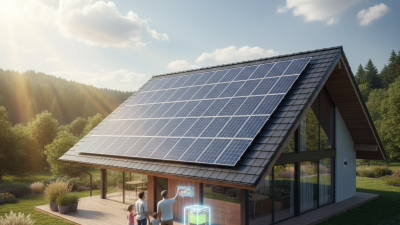
Rooftop solar photovoltaic panels suit homes and businesses with usable roof space and limited shade. They generate electricity close to where it is consumed, which can reduce daytime grid demand. Before choosing a system, check roof age, orientation, and afternoon shadows from nearby trees. A roof that looks sunny at noon may lose output later. Small details matter.

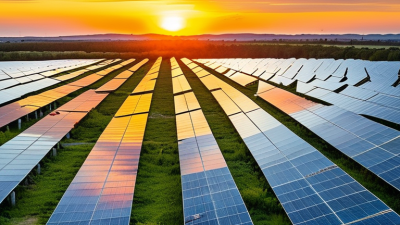
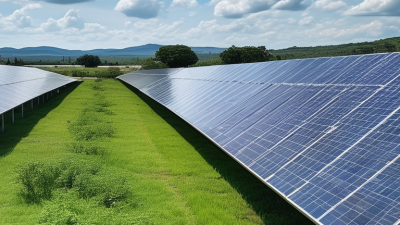
Utility-scale PV uses large arrays of panels to supply electricity to the grid. It can be a practical fit where land, grid connections, and strong sunlight are available. Projects need careful planning around local weather, transmission capacity, and land use. Concentrated solar power, or CSP, uses mirrors to focus sunlight and produce heat. With thermal storage, some plants can deliver electricity after sunset. CSP is most suitable for locations with intense, direct sunlight; it is not a universal alternative to PV. The distinction is easy to overlook.

Tips: Match the technology to the job. For rooftops, inspect shading and roof condition. For utility PV, confirm grid access early. For CSP, check direct-sun conditions and storage needs. Forecasts can be imperfect, so compare seasonal production, not just a single sunny-day estimate.