2026 Top Trends in Solar Supply for Renewable Energy Growth?
As the demand for renewable energy surges, the solar supply industry is evolving rapidly. Innovations in technology and materials are driving this growth. Companies must adapt to meet the needs of a changing market.
Solar supply is pivotal for enhancing energy independence. Yet, this sector faces challenges. Supply chain disruptions, fluctuating material costs, and regulatory hurdles exist. Stakeholders must navigate these obstacles carefully. Attention to detail is essential.
Looking toward 2026, understanding top trends in solar supply is vital. New applications and efficiencies could reshape the industry. Public and private investments are crucial for future stability. Engaging with local communities and policymakers will strengthen public trust. As we strive for sustainable energy solutions, a critical eye on our strategies will lead to better outcomes in solar supply.
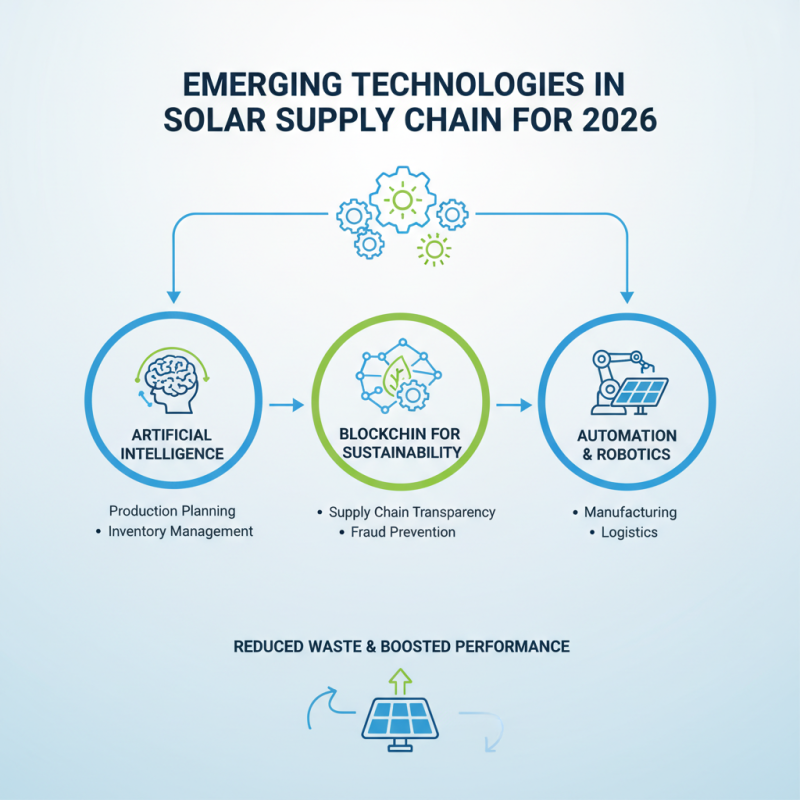
Emerging Technologies in Solar Supply Chain for 2026
The solar supply chain is evolving rapidly. Innovations are driving efficiency and sustainability in renewable energy. Emerging technologies play a critical role. For instance, artificial intelligence enhances production planning and inventory management. This integration reduces waste and boosts overall performance.
Blockchain technology offers transparency. It allows for real-time tracking of materials. This ensures ethical sourcing and fair trade practices. Although promising, challenges remain in scalability and implementation. Companies must navigate complexities in adoption and integration.
Energy storage solutions are gaining momentum. Battery technology is advancing, allowing for better energy management. This can mitigate intermittent supply from solar resources. However, the cost of storage remains a barrier for widespread use. Continued investment and research are essential for overcoming these hurdles in 2026.
Market Trends Impacting Solar Energy Production Growth
The landscape of solar energy production is rapidly evolving. In 2026, several trends will significantly influence the growth of this sector. Technological advancements continue to enhance solar panel efficiency, but not all regions adopt these innovations equally. Some areas lag behind due to higher installation costs or regulatory hurdles.
Market dynamics also play a crucial role. Rising demand for clean energy pushes manufacturers to innovate, yet the supply chain remains fragile. Material shortages can delay production, impacting project timelines. Additionally, government incentives for renewable energy can vary greatly from country to country, creating challenges for global consistency.
Consumer awareness is crucial. Many lack knowledge about solar energy benefits. Education efforts can drive adoption. However, misconceptions persist, which could derail progress. Emphasizing transparent communication is vital. The journey towards a sustainable future is not without obstacles, but understanding these market trends is essential for overcoming them.
Sustainable Materials and Their Role in Solar Panel Manufacturing
Sustainable materials play a crucial role in the production of solar panels. The shift towards renewable energy has highlighted the need for efficiency and eco-friendliness. According to a recent report by the International Renewable Energy Agency (IRENA), the use of recycled materials in solar manufacturing is expected to reduce the carbon footprint by up to 30% by 2026.
Solar panel manufacturers are increasingly adopting innovative materials. For instance, using bio-based polymers and recycled metals can significantly lower resource depletion. The Solar Energy Industries Association (SEIA) noted that sustainable sourcing can lead to lower production costs. However, there are challenges. Not all manufacturers can access these materials easily. This could slow down adoption rates.
Tips: Consider supporting companies that prioritize sustainable materials. Research local suppliers that can provide eco-friendly options. You can influence the market by choosing greener alternatives. Stay informed about industry trends, as sustainable practices are rapidly evolving. Be mindful that not all claims are verified; trust but verify.
Policy Changes Shaping the Solar Supply Landscape by 2026
The solar supply landscape is poised for transformation by 2026. Policy changes will play a central role in this evolution. Governments are increasingly recognizing the need for sustainable energy solutions. Regulations that promote solar energy adoption will drive investments. These policies are crucial for fostering industry growth and technological innovations.
In recent years, various countries have introduced incentives for solar installations. Tax credits and grants encourage businesses and homeowners to invest in solar technologies. However, the effectiveness of these initiatives often varies. Some regions may struggle with implementation. This inconsistency can lead to uncertainty in the solar market.
Moreover, the supply chain for solar components is vulnerable to geopolitical tensions. Trade policies can impact the availability of essential materials. Balancing local production and global sourcing is essential. As the demand for solar energy increases, so does the challenge of maintaining a stable supply. Policymakers must navigate these complexities to secure a resilient solar future.
Global Collaborations to Enhance Solar Supply Chain Efficiency
The solar supply chain is evolving rapidly, driven by global collaborations. Countries are working together to enhance the efficiency and resilience of solar energy systems. These partnerships aim to streamline production, distribution, and installation processes. Improved logistics can lead to faster project completion and reduce costs.
Countries are sharing knowledge and technology to develop innovative solar solutions. Joint research initiatives can deliver better materials and components. Collaborative efforts in policy-making can standardize regulations across borders. This promotes a smoother flow of solar products in international markets.
However, these collaborations face challenges. Different regulations can hinder cooperation. Political tensions may impact supply chain dynamics. Addressing these issues requires open communication and trust among nations. A focus on sustainability must guide decisions, ensuring that growth benefits all involved.