2026 Top Solar Technology Innovations Transforming Energy Solutions?
The solar technology sector is experiencing unprecedented growth. According to a recent report by the International Energy Agency, solar energy accounted for over 30% of global renewable energy generation in 2022. This trend signifies the increasing reliance on solar solutions for sustainable energy needs. As innovations continue to emerge, the landscape of energy solutions is undergoing a significant transformation.
One expert in solar technology, Dr. Sarah Johnson, emphasizes the importance of these advancements. She states, “Innovative solar solutions are crucial for meeting our future energy demands.” This sentiment reflects a larger industry perspective on the transformative potential of emerging technologies. With breakthroughs in photovoltaic materials and energy storage, the efficiency and affordability of solar technology are improving rapidly.
Yet, the sector faces challenges that require ongoing reflection. Issues such as recycling solar panels and integrating new technologies into existing infrastructure demand attention. As we approach 2026, the pursuit of innovation in solar technology must balance potential benefits and operational realities. Embracing this dynamic will be essential for achieving a sustainable energy future.

2026 Solar Innovation Landscape: Key Players and Emerging Technologies
The solar innovation landscape in 2026 showcases diverse players and groundbreaking technologies reshaping energy solutions. Emerging startups and established companies are at the forefront, pushing boundaries in solar efficiency. New materials and designs promise greater energy capture. These advances could lower costs, but challenges remain. High production costs still limit widespread adoption.
Bifacial solar panels are gaining traction. They capture light from both sides, enhancing energy output. This technology shows promise but requires careful site planning to maximize effectiveness. Energy storage solutions are also evolving. Innovations in battery technology are critical for integrating solar energy into existing grids. Companies are experimenting with different charging methods to improve performance.
Sustainability remains a priority. The industry faces scrutiny over resource extraction and waste management. Responsible sourcing of materials is essential for long-term growth. As these technologies mature, collaboration among innovators, regulators, and users will be crucial. The path forward is not without obstacles, but the potential for solar to transform our energy landscape is undeniable.
Efficiency Advances: New Solar Cell Materials and Conversion Rates
Innovations in solar cell materials are pioneering a new era of energy solutions. The latest advancements focus on enhancing efficiency and conversion rates. Researchers are exploring perovskite solar cells, which promise to boost energy conversion significantly. These materials are lighter and cheaper to produce compared to traditional silicon cells. The ability to layer these cells could also improve light absorption, further increasing their efficiency.
New materials like organic photovoltaics are gaining traction too. They are flexible and can be integrated into various surfaces. Potential applications range from building facades to wearable technology. However, the longevity of these materials remains a concern. Researchers are tasked with ensuring that efficiency does not compromise durability.
Moreover, while these innovations present exciting opportunities, challenges persist. The manufacturing processes can still be complex and costly. Scaling up the production of new materials is a hurdle that needs addressing. It is essential to balance innovation with practicality. Harnessing these technologies requires careful consideration of real-world applications.
2026 Top Solar Technology Innovations Transforming Energy Solutions
Energy Storage Breakthroughs: Impact on Solar Reliability and Grid Stability
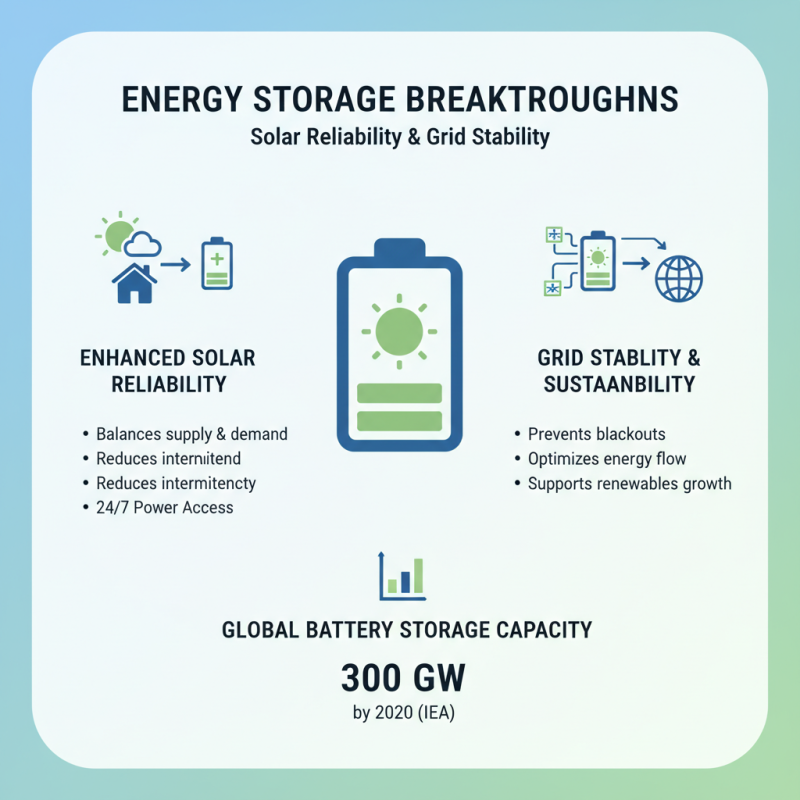
Energy storage technologies are vital for enhancing the reliability of solar power. As the need for sustainable energy increases, advancements in battery systems evolve rapidly. According to the International Energy Agency, global battery storage capacity is expected to reach 300 GW by 2030. These innovations can help balance energy supply and demand.
Advanced battery systems can now store solar energy more efficiently. For instance, lithium-ion batteries have improved their cycle life and energy density. Yet, challenges remain. The production of these batteries can generate significant environmental impacts. The extraction of raw materials raises sustainability questions.
Grid stability relies on effective energy storage. Enhanced storage solutions can reduce reliance on fossil fuels. However, systems still face issues such as end-of-life disposal and recycling processes. As the industry grows, addressing these concerns becomes crucial. The path forward involves innovative strategies that not only maximize efficiency but also ensure ecological safety.
Smart Solar Integration: IoT and AI Enhancements for Energy Management
The integration of IoT and AI in solar technology is reshaping energy management. Smart devices now communicate seamlessly, offering real-time data on energy consumption. This allows homeowners and businesses to optimize their energy use efficiently. AI algorithms analyze this data, predicting energy needs and adjusting solar outputs accordingly.
Imagine a system that learns your peak usage times. It can manage solar power to store energy when sunlight is abundant. Yet, these advanced systems can face challenges. Data privacy concerns arise as smart devices continuously collect information. Users may feel uneasy about sharing personal energy usage patterns.
Moreover, ensuring the technology is accessible to everyone is a hurdle. Some communities might lack the resources to implement these innovations. This highlights the need for balanced approaches in solar technology. A commitment to equity in energy solutions is essential. By addressing these issues, smart solar integration can truly benefit all.
2026 Top Solar Technology Innovations Transforming Energy Solutions
| Technology Type |
Key Features |
Benefits |
Potential Impact |
| Smart Inverters |
Real-time data processing, grid responsiveness |
Enhanced energy efficiency, reduced outages |
Increased grid stability and reliability |
| IoT Sensors |
Remote monitoring, predictive maintenance |
Lower maintenance costs, optimized performance |
Sustainable operation of solar systems |
| AI-based Energy Management |
Machine learning algorithms for demand forecasting |
Maximized energy capture, reduced waste |
Enhanced integration with renewable sources |
| Blockchain for Energy Trading |
Decentralized transactions, secure energy trading |
Transparency, reduced transaction costs |
Empowerment of individual energy producers |
| Energy Storage Innovations |
Advanced battery technologies, improved cycle life |
Increased storage capacity, reduced costs |
Greater viability of solar as a primary energy source |
Sustainability Trends: Circular Economy Practices in Solar Technology Development
In recent years, the solar technology sector has embraced the principles of a circular economy. This approach focuses on efficiency and sustainability. According to the International Renewable Energy Agency (IRENA), solar energy could reduce global carbon emissions by up to 70% by 2050. This significant potential highlights the urgent need for sustainable practices within the industry.
Circular economy practices in solar technology development aim to reduce waste and enhance resource efficiency. Industry leaders are exploring ways to recycle solar panels rather than letting them end up in landfills. Reports estimate that the global market for solar panel recycling could reach $15 billion by 2030, driven by increasing pollution concerns and resource scarcity. While this is promising, challenges remain in establishing efficient recycling processes and technologies.
Furthermore, the production of solar components often generates environmental impacts. Ensuring that materials are sourced responsibly is crucial. A shift towards using recycled materials could drastically lower the carbon footprint of solar technologies. However, substantial investments and collaborations between governments and the private sector are required. The dialogue around sustainability must continue to evolve, emphasizing both innovation and responsibility within the solar industry.