Choosing solar panels for your home is not a simple shopping decision. A glossy efficiency number may look impressive. Yet performance depends on your roof, climate, shading, electricity use, and budget. Fatih Birol, Executive Director of the International Energy Agency, called solar “the new king of electricity markets.” That statement reflects solar’s rapid growth, but it does not identify the right panel for every household. Your roof is not a laboratory.
This guide examines the practical details behind a confident choice. It considers wattage, efficiency, temperature performance, warranties, degradation rates, dimensions, and installer quality. A 430-watt panel may seem better than a 400-watt model. However, the larger panel might waste usable roof space. A shaded chimney can matter more than a small efficiency difference. Real homes are uneven. We will also compare monocrystalline technologies, financing assumptions, maintenance needs, and expected payback. Payback estimates can mislead when utility prices or incentives change. That uncertainty deserves attention.
The most reliable decision starts with measured evidence. Review twelve months of electricity bills and inspect the roof at different times. Ask installers for production estimates based on local weather, not idealized sunshine. Check certifications and warranty terms carefully. A panel can be excellent and still be poorly matched to your home. I have included room for doubt because no recommendation remains perfect forever. This approach aims to make solar panels understandable, comparable, and genuinely useful. The final choice should fit your household, not merely win a product comparison.
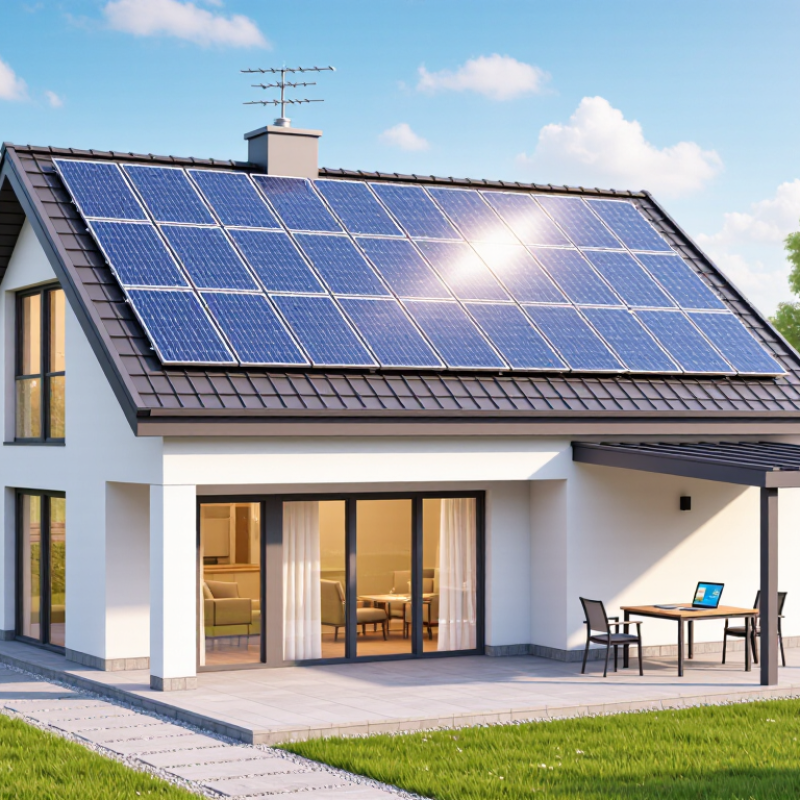
How to Choose the Best Solar Panels for Your Home?
Choosing solar panels starts with their type, not just their advertised power rating. Monocrystalline panels use high-purity silicon and usually deliver the highest efficiency. They suit smaller roofs where every square metre matters. Their dark, uniform appearance also appeals to many homeowners. However, they often cost more.
Polycrystalline panels typically use multiple silicon fragments. They can be more affordable, but usually produce slightly less power in the same space. Thin-film panels are different. They are lightweight and flexible, and they can perform reasonably well in high temperatures or weak light. Their lower efficiency may require a larger roof area, which is easy to overlook. Local weather and roof conditions matter more than many sales charts suggest.
I used to treat efficiency as the deciding number; that is too narrow. A panel with excellent efficiency may perform poorly if trees shade it each afternoon. Check the roof’s direction, pitch, usable area, summer heat, and winter snow. Ask for independent performance testing, product warranties, and installation records. A qualified installer should calculate expected annual production using local sunlight data, not guesswork. Review the inverter, mounting system, and maintenance access too. The cheapest quote may hide weaker components or difficult repairs. My own selection would remain uncertain until the roof survey and electricity history matched the proposal.
How to Choose the Best Solar Panels for Your Home?
Assessing Your Home’s Energy Needs and Solar Potential
Before comparing solar panels, measure how your home actually uses electricity. Review twelve months of utility bills and record monthly kilowatt-hours. Note seasonal changes from heating, cooling, pool pumps, or electric vehicles. A winter bill can reveal more than an average monthly figure. My first estimate was too optimistic because I ignored evening heating demand. Real usage is messier.
Tips: Check your roof’s direction, pitch, age, and usable space. Walk outside at different times and observe shadows from trees, chimneys, and nearby buildings. Even partial shade can reduce production during important hours. Photograph the roof at morning, noon, and late afternoon. These simple records help a professional create a more realistic estimate.
Solar potential also depends on local sunlight, roof condition, and future electricity needs. A qualified solar professional should assess shading with site measurements, not rely only on online maps. Ask how the proposed system performs during cloudy months and high-demand periods. Leave room for roof repairs or an extra appliance later. That sounds cautious, but household needs often change faster than expected. Compare the estimated annual production with your recorded consumption, and question unusually confident predictions.
| Assessment Factor | Example Home Data | Solar Planning Interpretation | Recommended Check |
|---|---|---|---|
| Annual electricity use | 10,800 kWh per year (approximately 900 kWh per month) |
This is the baseline for estimating the required solar system size. | Review 12 months of utility bills and account for planned electric vehicles, heat pumps, or home additions. |
| Average peak sun hours | 4.5 hours per day | Solar production varies substantially by location, season, weather, and roof orientation. | Use a location-specific solar resource assessment rather than a national average. |
| Estimated system performance ratio | 80% | The allowance covers typical losses from temperature, wiring, inverter conversion, dust, mismatch, and other system factors. | Ask for production estimates that clearly state the assumed losses and degradation rate. |
| Estimated solar system size | Approximately 8.2 kW DC | Calculation: 10,800 kWh ÷ (4.5 peak sun hours × 365 days × 80%) ≈ 8.2 kW. | Size the system according to energy goals, local regulations, utility rules, and available roof space. |
| Expected annual solar generation | Approximately 10,800 kWh in the first year | This estimate is intended to offset the example home’s annual electricity consumption, not necessarily every monthly bill. | Compare monthly generation with monthly consumption because seasonal production and usage may not match. |
| Usable roof area | At least 40 m² of mostly unobstructed area | An 8.2 kW system using approximately 400 W modules would require about 21 modules and roughly 40 m², including spacing and access. | Exclude setbacks, skylights, vents, chimneys, roof edges, and areas needed for maintenance access. |
| Roof orientation | South-facing in the Northern Hemisphere or north-facing in the Southern Hemisphere |
Equator-facing roofs generally receive strong annual solar exposure, although east- and west-facing roofs can also perform well. | Evaluate the roof azimuth and tilt together; orientation alone does not determine total output. |
| Roof tilt | Approximately 20°–35° | A moderate tilt is suitable for many residential locations, but the best angle depends on latitude and seasonal energy priorities. | Confirm the roof pitch and whether mounting equipment can safely accommodate the design. |
| Annual shading impact | Less than 10% | Limited shading supports more predictable production; even partial shade can reduce output from affected sections. | Check trees, neighboring buildings, chimneys, and seasonal shadows throughout the day and year. |
| Roof condition | Expected remaining life: at least 15 years | Solar equipment can remain in service for decades, so replacing an aging roof before installation may reduce future removal costs. | Obtain a structural and roofing inspection before final system design. |
| Panel efficiency target | Approximately 20%–23% | Higher-efficiency panels can produce more power in limited roof space, but efficiency should be compared with total installed cost and warranty terms. | Compare rated power, efficiency, temperature coefficient, product warranty, and performance warranty. |
| Battery storage requirement | Not included in the base estimate | Battery size depends on evening loads, backup objectives, local electricity rates, and export compensation rules. | Separate energy-offset goals from backup-power goals before selecting storage capacity. |
Planning note: The figures above are engineering-style example assumptions. Actual production should be calculated using the home’s location, roof geometry, shading profile, local weather data, equipment specifications, and utility requirements.
Choosing solar panels means comparing more than the efficiency number printed on a datasheet. Fraunhofer ISE’s Photovoltaics Report 2024 places many commercial panels near 20% to 23% efficiency. Higher efficiency saves roof space. However, performance depends on heat, shade, orientation, and wiring. A panel producing well at noon may lose output on a hot August afternoon. Check temperature coefficients, low-light behavior, and the measured power tolerance.
Real homes reveal details that brochures often miss. I once compared two roof areas with similar sunlight but different ventilation. The better-ventilated section stayed cooler and produced more consistent afternoon power. The IEA PVPS Trends 2024 report records global photovoltaic capacity above 1.6 terawatts by the end of 2023. That scale shows strong field experience, but it does not make every installation reliable. Local testing still matters.
Durability deserves equal attention. NREL’s review of photovoltaic degradation data found a typical annual decline near 0.5%, although results vary by climate and product design. Ask for independent test evidence under IEC 61215 and IEC 61730 requirements. Inspect warranty conditions, degradation limits, and resistance to moisture, hail, and wind. Small print matters. A panel can be efficient yet poorly suited to a coastal roof. I would also leave space for airflow and photograph the installation before commissioning. My own judgment can be incomplete, especially when long-term climate exposure is uncertain.
How to Choose the Best Solar Panels for Your Home?
Cost should mean more than the panel price. Request an itemized quote covering equipment, labor, permits, wiring, monitoring, and possible roof repairs. A cheaper system may produce less electricity or require earlier replacement. Compare estimated annual output, not just the system size. Ask how shade, seasonal sunlight, and rising electricity rates affect the forecast. Financing can also change the real cost substantially. Check the interest rate, fees, payment schedule, and expected payback period. Battery storage is useful for some homes, but it can add significant expense.
Read every warranty carefully. A strong panel warranty should cover product defects and declining performance for many years. Installation warranties matter too, especially for roof leaks, loose wiring, and workmanship problems. Confirm who handles claims and whether the warranty transfers if you sell the house. These details are easy to overlook. They should not be.
Installation quality often determines whether good panels perform well. Choose a properly qualified installer who examines roof age, orientation, ventilation, and structural condition. Ask for a clear electrical design and inspection process. Photos of cable routes and mounting points can help you verify the work later. Maintenance is usually limited, but not zero. Monitor monthly output, remove heavy dirt when appropriate, and keep nearby trees trimmed. Snow, dust, or a new shadow can reduce production. I would not assume every promised output figure is realistic; weather, roof conditions, and imperfect measurements can create disappointing results. Get an independent review when the proposal feels unusually optimistic.
The chart shows typical U.S. residential solar installation cost ranges before incentives. Actual prices vary with system size, roof complexity, permitting, labor rates, equipment, and local conditions.
Selecting the best solar panels starts with your roof, electricity use, and realistic budget. A high-efficiency panel may produce more power in limited roof space. However, it can cost more than your monthly savings justify. Check your roof’s direction, pitch, age, and afternoon shade before comparing specifications. A simple roof sketch and twelve months of electricity bills can prevent expensive guesses.
Look beyond the advertised wattage. Review efficiency, temperature performance, degradation rates, product warranties, and installation requirements. Panels lose a small amount of output over time, so this figure matters. Ask whether the installer uses certified equipment and provides clear, written performance estimates. Local weather also matters. Heavy snow, strong winds, salt air, or frequent heat can influence the right panel design.
Your budget needs room for more than panels. Include mounting hardware, electrical upgrades, permits, monitoring, and possible roof repairs. Compare at least three detailed quotes using the same system size and assumptions. The cheapest quote may omit important work. That mistake can become expensive.
Be cautious with perfect forecasts. Real roofs have dust, clouds, seasonal shade, and occasional equipment problems. A sensible proposal should explain these limits instead of promising guaranteed savings. If your roof may need replacement soon, delaying installation could be wiser, even when solar prices look attractive.
Need changes.