Top 10 Solar Supply Companies You Need to Know?
In today's rapidly evolving energy landscape, solar supply companies play a crucial role in the transition to renewable energy. These firms provide essential products and services that drive solar adoption worldwide. With countless options available, identifying the top companies can be overwhelming.
The dynamics of solar supply are shaped by technology, market needs, and regulatory frameworks. Each company's specialty varies, from solar panels to inverters and battery storage solutions. Understanding the strengths and weaknesses of these companies is essential for consumers and businesses alike.
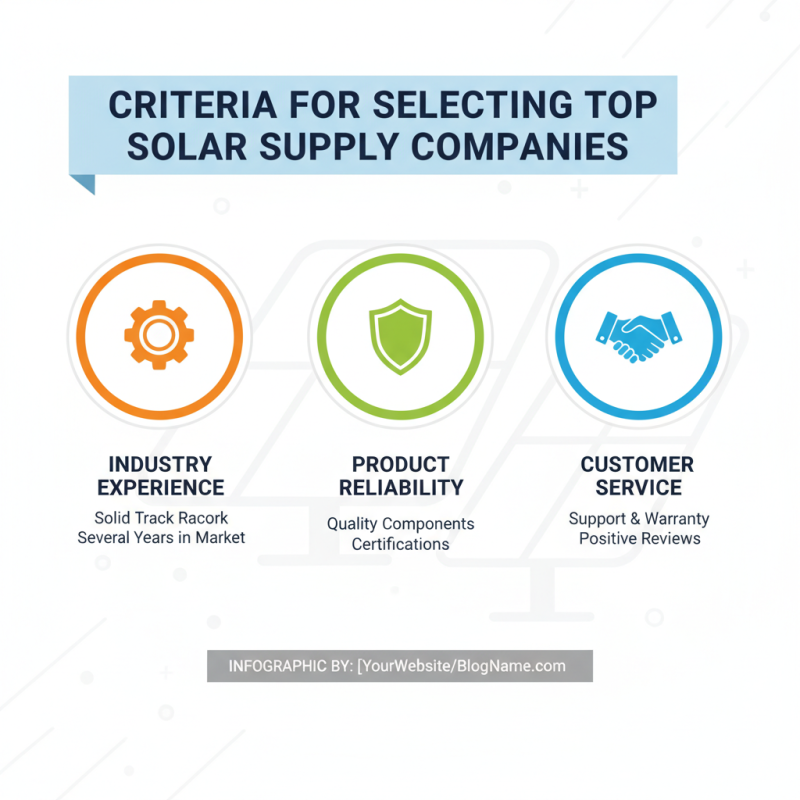
However, the solar supply sector is not without its challenges. Quality control can vary, and some companies may lack adequate customer service. It is essential to research and reflect on potential partners. By exploring the best solar supply companies, one can make informed decisions vital to advancing sustainable energy goals.
Overview of the Solar Supply Industry
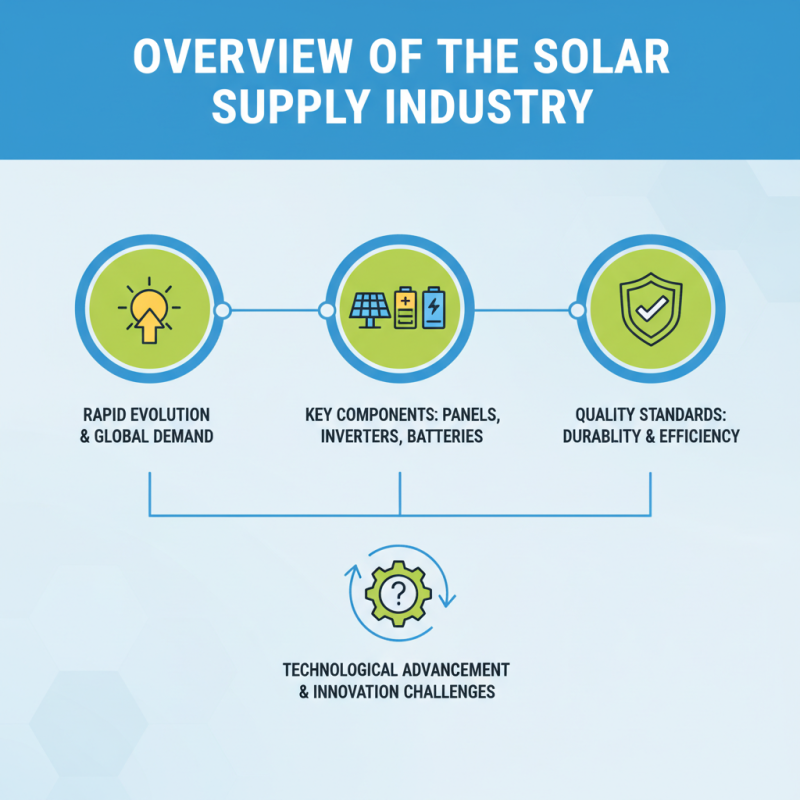
The solar supply industry is rapidly evolving, reflecting increasing global demand for renewable energy solutions. A variety of components, such as solar panels, inverters, and batteries, play vital roles in this sector. Each component must meet stringent quality standards. This ensures durability and efficiency. As technology advances, manufacturers often face challenges in keeping up with innovations.
Market dynamics significantly impact the solar supply chain. Supply issues can arise from material shortages or logistical complications. These challenges can lead to delays in project completion. Furthermore, price fluctuations often affect the affordability of solar solutions for consumers. Such instability raises questions about long-term investments in renewable energy.
Regulation also shapes the industry landscape. Local and international policies influence operational practices. Compliance with environmental standards is crucial for manufacturers. However, navigating these regulations can be complex. Many companies report difficulties in adapting to changing guidelines. Therefore, keeping informed about regulatory shifts is essential for industry stakeholders. The solar supply industry is full of potential, but it also requires constant adaptation and reflection.
Highlighting the Top 10 Solar Supply Companies
The solar supply industry has seen significant growth in recent years, driven by the increasing demand for renewable energy. According to a report from the International Energy Agency (IEA), solar energy capacity reached over 900 GW globally in 2020, marking a 22% increase from the previous year. This momentum highlights the importance of understanding key players in the market.
Several factors place top solar supply companies at the forefront. They provide critical components like photovoltaic cells and inverters. Industry insights reveal that these companies contribute significantly to lowering costs, which have dropped by about 80% since 2010. This reduction makes solar energy more accessible. A recent study by Bloomberg New Energy Finance indicates that solar power may become the cheapest form of electricity in some regions by 2025.
However, challenges remain. Quality control is essential as the demand rises. Some suppliers struggle with consistency. Reports suggest that inadequate supply chains can lead to project delays and increased costs. Stakeholders must pay attention to details, ensuring they choose reliable companies. Understanding these market dynamics is crucial, as they shape the future of solar energy adoption. Investing in knowledgeable companies ensures a brighter, sustainable future.
Analysis of Each Company's Market Impact
The solar supply industry has seen remarkable growth over recent years. Companies in this sector greatly impact global energy markets. Their innovations influence renewable energy adoption and drive competitive pricing. Some firms not only lead in technology but also shape local economies. Understanding their market roles is essential.
One notable trend involves reducing production costs. Firms are working diligently to enhance efficiency. However, this comes with challenges. Lower prices can sometimes lead to reduced product quality. Not all companies maintain rigorous standards during rapid expansion. Moreover, the supply chain can introduce unpredictability. Some companies rely on overseas manufacturing, which may cause delays.
Collaboration also plays a significant role in this landscape. Partnerships between solar suppliers and other sectors drive technology improvements. However, these alliances require careful management. Misaligned goals can lead to failures in execution. Industry experts emphasize the importance of establishing clear communication between partners. This complexity highlights the necessity for reliable research and awareness of market dynamics.
Future Trends in Solar Supply and Technology
The future of solar supply is bright, yet complex. As technology evolves, innovations like photovoltaic cells will dominate. New materials improve efficiency, but availability remains a challenge. Companies are exploring perovskite solar cells and bifacial modules. These advancements could reshape the industry.
Supply chain issues are another concern. The demand for solar technology is surging. However, raw material shortages could slow progress. Certain metals used in panels are becoming scarcer. This scarcity urges companies to find sustainable sources. The need for recycling old panels is also growing. Without it, the industry could face environmental challenges.
Solar storage solutions are vital for future growth. Batteries are essential for harnessing solar energy. New technologies aim to increase storage capacity and lifespan. Yet, reliability can sometimes waver. High costs may deter consumers from switching to solar. Addressing these obstacles is crucial for widespread adoption. The path ahead may be uncertain, but the potential is immense.
Top 10 Solar Supply Companies You Need to Know
| Company Rank |
Annual Revenue (in $ Billion) |
Market Share (%) |
Employees |
Countries Operated In |
Sustainability Initiatives |
| 1 |
5.2 |
18.5 |
3500 |
20 |
Carbon neutrality goal by 2030 |
| 2 |
4.1 |
15.0 |
2800 |
15 |
Investing in local community solar projects |
| 3 |
3.5 |
12.2 |
2500 |
10 |
Zero waste manufacturing process |
| 4 |
2.8 |
8.9 |
1800 |
8 |
Solar recycling program |
| 5 |
2.2 |
7.5 |
1500 |
12 |
Partnerships with NGOs for green projects |
| 6 |
1.9 |
6.7 |
1200 |
5 |
Transitioning to 100% renewable energy |
| 7 |
1.5 |
5.0 |
900 |
7 |
Education programs for renewable energy |
| 8 |
1.3 |
4.6 |
800 |
6 |
Focus on affordable solar solutions |
| 9 |
1.1 |
3.9 |
700 |
4 |
Community solar initiatives |
| 10 |
0.9 |
3.0 |
500 |
3 |
Investing in research for solar efficiency |